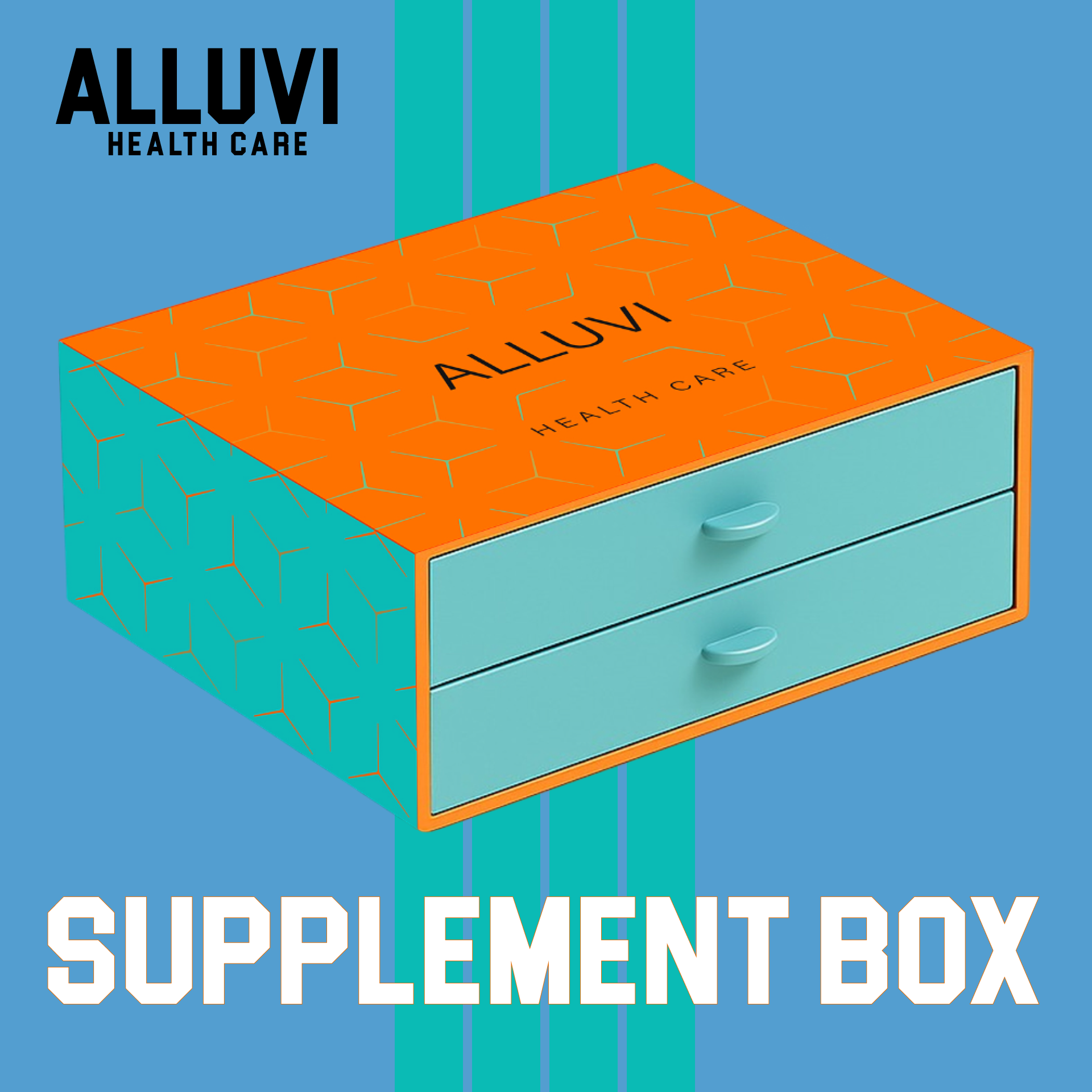
Alluvi Healthcare (sometimes stylized as Alluvi Labs or Alluvi) presents itself as a wellness and peptide research brand offering advanced compounds, injectable pens, and supplement formulations intended to support metabolism, weight control, and general wellness. Their product line includes peptide vials, prefilled pens, nutritional support gummies, and tracking tools to help users monitor progress.
On their official site, Alluvi describes its offerings as “pharmaceutical-grade Retatrutide and high-impact supplements — backed by science, trusted by professionals.” They also advertise that users can lose up to 22.5 % body weight when using Retatrutide in conjunction with consistent dosing, tracking, and nutritional support.
Alluvi positions itself not simply as a peptide vendor, but as a holistic wellness system combining product, tracking software (an “Alluvi app”), and ongoing guidance to help clients manage injections, log nutrition, monitor weight, and stay consistent.
However, it is critical to observe that the Alluvi sites also state that their products are for “research use only” or R&D purposes and not for human consumption. This caveat underlines the regulatory gray zone in which many peptide providers operate.
Overall, Alluvi Healthcare is best understood as a brand at the intersection of peptide R&D, wellness strategies, and client support systems, with a flagship emphasis on Alluvi Retatrutide as the core peptide offering.
To understand Alluvi Retatrutide and why it’s central to the Alluvi Healthcare offering, we must place it in the broader context of peptide therapeutics and weight loss science.
Peptides are short chains of amino acids that can act as signaling molecules, hormones, or receptor modulators. In the domain of metabolic health, several peptide classes (like GLP-1 analogues, GIP agonists, etc.) have gained attention for their capacity to regulate appetite, insulin sensitivity, energy expenditure, and fat storage.
Traditional therapies such as GLP-1 receptor agonists (e.g. semaglutide, liraglutide) target a single hormonal axis—boosting satiety, moderating gastric emptying, and improving insulin signaling. The more recent strategies involve multi-agonist peptides that act on multiple hormone receptors simultaneously, aiming to amplify metabolic effects beyond what a single pathway can achieve.
Retatrutide (also known as LY-3437943) is a triple agonist peptide designed to engage three key receptor classes:
-
GLP-1 receptor agonism
-
GIP (glucose-dependent insulinotropic polypeptide) receptor agonism
-
Glucagon receptor agonism
Because retatrutide stimulates all three pathways, it is sometimes called a “triple G” molecule.
Mechanistically, retatrutide may reduce appetite (via GLP-1 and GIP), enhance insulin responsiveness, and boost energy expenditure (through glucagon receptor stimulation).
In early phase trials, retatrutide demonstrated significant weight loss. In one 48-week study, participants on high doses lost an average of more than 24 % of baseline body weight.
However, that level of efficacy comes with trade-offs: side effects, physiological constraints, and regulatory uncertainty. Some trial participants experienced nausea, gastrointestinal discomfort, and other adverse events typical of potent peptide therapies.
It is crucial to emphasize: retatrutide is not yet approved for general clinical use. It remains in clinical trials under regulatory scrutiny.
Thus, Alluvi Retatrutide as offered through Alluvi Healthcare is framed as a research-grade peptide aligned with experimental or controlled wellness contexts—not as a prescription drug.
Understanding how Alluvi Retatrutide stacks against alternative peptides and therapies helps contextualize its promise and limitations.
GLP-1 agonists stimulate one hormonal axis. They are approved in many regions and have relatively well-characterized safety profiles. However, weight loss is moderate (e.g. 15 % or so) compared with trial results of retatrutide (~24 %).
GLP-1 therapies tend to have fewer side effects, but also a ceiling in efficacy compared to multi-agonists.
Dual agonists act on GLP-1 + GIP, improving efficacy over GLP-1 alone. Tirzepatide (Mounjaro) has shown strong weight loss in trials. Retatrutide’s triple agonist profile adds glucagon receptor activity, which may boost energy expenditure beyond what dual agonists achieve.
Hence, in theory, retatrutide may outperform dual agonists in weight loss magnitude — at possibly greater side effect risk.
Retatrutide is among a next generation of peptides targeting multiple metabolic pathways. Some rivals in R&D may combine GLP-1, GIP, glucagon, or even other axes like amylin. However, many are less publicly documented. Retatrutide currently enjoys relatively greater visibility in literature.
From Alluvi’s viewpoint, offering a well-known multi-agonist peptide like retatrutide gives clients access to advanced potential, while alternative peptides remain less validated.

 NAD+ 1,000mg
1 × £170.00
NAD+ 1,000mg
1 × £170.00